Free Bet Strings Attached: How Sportsbook Promos Are Quietly Rewiring Your Betting Brain
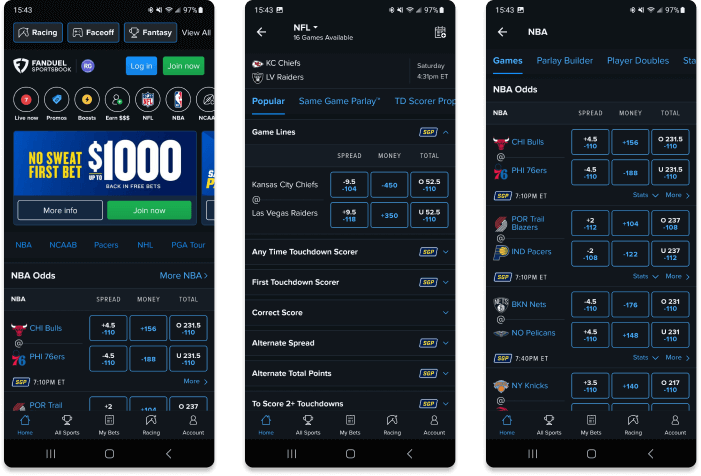
Photo: smartphone sportsbook app bonus offer promotion notification, via img.sportsbookreview.com
You've seen the ads. Sign up, deposit, and get $150 in bonus bets. Or maybe it's a "second chance" offer — lose your first bet and get it back in free credits. These deals are everywhere, plastered across NFL broadcasts, NBA highlights, and your Instagram feed with the persistence of a bill collector.
And look, some of these promotions are genuinely extractable. Disciplined bettors can and do squeeze real value out of sign-up offers. But that's not what this is about.
This is about what happens after the welcome bonus — and what the ongoing promo structure at the biggest US sportsbooks is quietly doing to the way you bet.
The Welcome Bonus Is the Easy Part
Let's be honest: the sign-up offers at DraftKings, FanDuel, BetMGM, and Caesars are designed to get you in the door. They're marketing spend, not charity. But they're relatively transparent. You deposit, you get a credit, you use it. The math is straightforward enough that plenty of experienced bettors can work through the playthrough requirements without too much damage.
The real manipulation starts once you're a registered customer and the book needs to keep you active.
Reload bonuses, odds boosts, profit boosts, "bet and get" offers — these are the tools that do the heavy lifting in terms of shaping your behavior. And they're a lot more sophisticated than they appear.
The Anatomy of an Odds Boost
Odds boosts are everywhere. DraftKings and FanDuel push them constantly — a boosted parlay here, an enhanced player prop there. They look like free value because the sportsbook is giving you better odds than the market. And sometimes, genuinely, they are.
But look at which bets get boosted. It's almost never a straight spread on a marquee game. It's almost always a parlay, a same-game parlay, or a player prop — specifically the bet types that carry the highest house margin in the first place.
A standard spread bet at -110 gives the book roughly a 4.5% edge. A three-leg same-game parlay? The vig stacks with each leg, and the correlation adjustments books apply can push the house edge well above 15-20%. Boosting that parlay from +450 to +500 is generous-looking window dressing on a bet that was already tilted heavily in the book's favor.
What the boost actually does is make a bad bet slightly less bad — while getting you comfortable placing bet types you'd probably skip if you were thinking clearly.
How Free Bet Credits Warp Your Decision-Making
Here's where it gets psychologically interesting. Free bets and bonus credits aren't the same as cash — and your brain knows it, even if you don't consciously register it.
Research on mental accounting shows that people treat "house money" differently than real money. When you're placing a $25 free bet, the loss doesn't feel the same as losing $25 from your actual bankroll. That reduced pain threshold makes you more likely to take shots you'd normally pass on — longer odds, riskier props, parlays with more legs.
Sportsbooks know this. The free bet credit is specifically designed to lower your inhibitions around certain bet types. That $25 bonus you got for betting on the Thursday night game? You're probably not going to put it on the Cowboys -3. You're going to swing for something at +300 or higher, because "what's the worst that can happen, it's free money."
Except it's not free money. It's a behavioral nudge toward a higher-margin product, delivered in a format that bypasses your normal risk management.
BetMGM's Reload Structure: A Case Study
BetMGM runs one of the more aggressive ongoing promo programs in the US market. Their reload offers typically require you to opt in, place a qualifying bet at minimum odds (usually -200 or longer), and then receive a bonus credit as a percentage of that bet.
Sounds reasonable. But dig into the terms: the qualifying bet minimum odds requirement pushes you away from heavy favorites (where you might have a real edge) and toward longer shots. The bonus credit itself often comes with a 1x playthrough requirement, but it must be used on specific bet types — frequently props or same-game parlays.
The result? To claim your reload bonus, you've placed a bet you might not have otherwise placed, at odds the book is comfortable with, and received a credit you can only use on the book's highest-margin products. That's not a promotion. That's a funnel.
FanDuel's Profit Boosts and the Parlay Pipeline
FanDuel leans hard into profit boosts — percentage increases on your potential winnings, applied to specific bet types. The catch is almost always the same: profit boosts are almost exclusively available on parlays and same-game parlays.
FanDuel has been extraordinarily successful at normalizing same-game parlays as a product category. Five years ago, SGPs barely existed. Now they're one of the most popular bet types in the US market. Promotional structure is a huge reason why. When every week brings a new "boost your SGP" offer, bettors gradually shift their mental model of what a normal bet looks like.
That's not an accident. It's product development disguised as generosity.
How to Actually Extract Value Without Getting Played
None of this means you should ignore sportsbook promotions entirely. But you need to approach them with the same critical eye you'd bring to any other bet.
Separate the offer from the bet. Ask yourself: would I place this bet without the promotion? If the answer is no, think carefully before using a promo as justification. The promotion doesn't make a bad bet good.
Read the qualifying terms before you opt in. Minimum odds requirements, specific bet type restrictions, and playthrough conditions are where the real cost of a promotion lives. A "free" $20 that requires three same-game parlay legs to unlock isn't free — it's a commitment.
Use boosts on bets you were already going to make. If you were planning to bet a player prop anyway and there's a legitimate odds boost available, great — that's real value. But don't reverse-engineer your betting decisions around what happens to be boosted this week.
Track your promo bets separately. Keep a log of every bet you placed primarily because of a promotional offer. After 30-40 of those, look at your ROI on that specific subset. Most bettors are surprised by what they find.
The Bottom Line
Sportsbooks aren't running promotions because they're feeling generous. Every free bet, reload bonus, and odds boost is a calculated investment designed to increase engagement, shift your betting behavior toward higher-margin products, and build habits that are good for the book's bottom line.
That doesn't mean you can't play the system. But you have to play it deliberately, with clear eyes, and without letting the dopamine hit of "free money" override the discipline that actually keeps your bankroll healthy.
The best promo is the one you use on a bet you already liked. Everything else is the house talking.